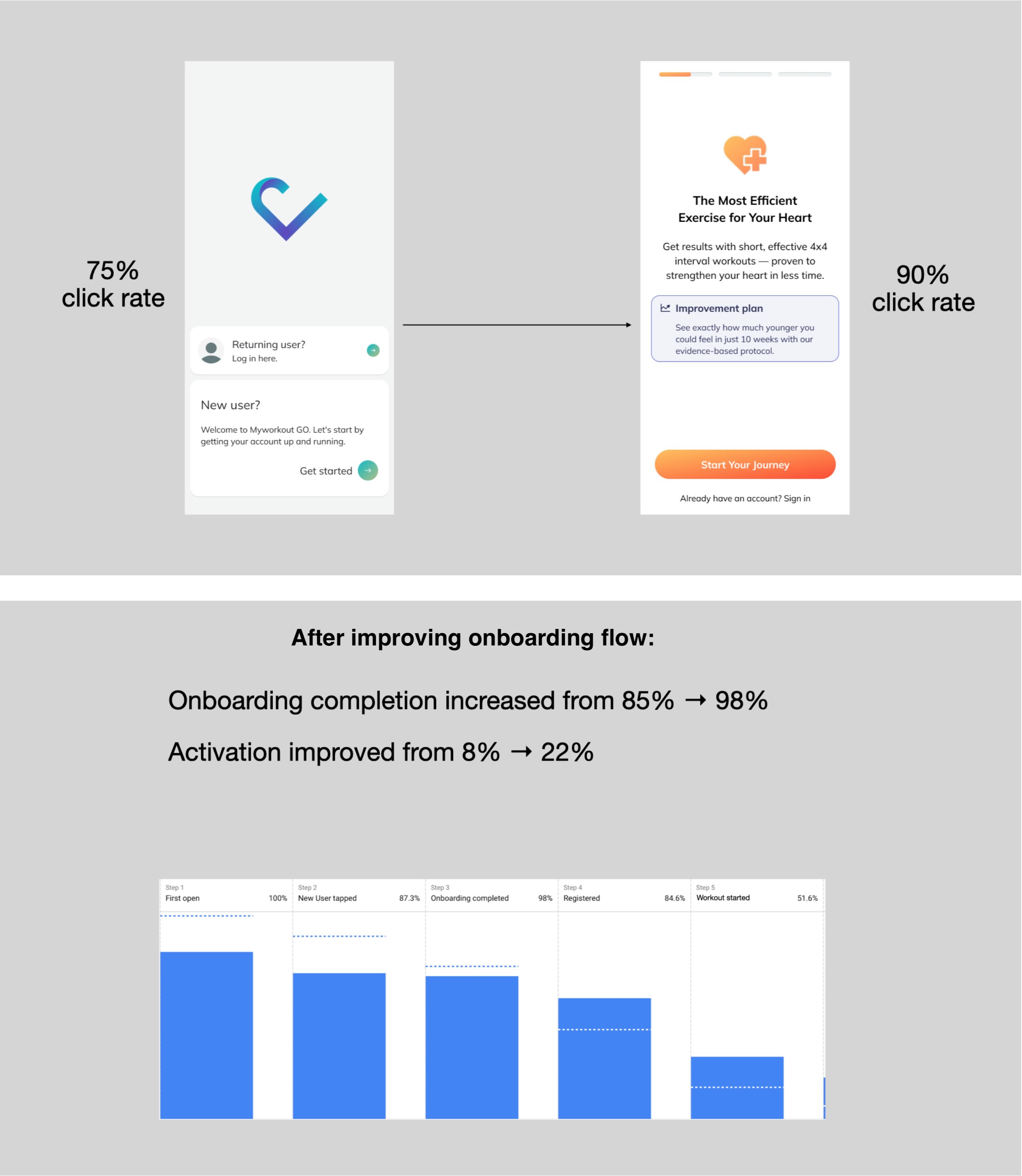
When attention spans shrink, your onboarding becomes your survival test.
Today's users live in a world of infinite distractions.
They scroll, swipe, skip, and judge faster than ever. TikTok and YouTube Shorts rewired how we consume information, quick impressions, instant decisions. People don't patiently explore; they sample experiences, discard what doesn't click, and move on.
This behavior has transformed how users interact with new apps. When someone downloads your product, you're not getting a long-term commitment, you're getting a five-minute audition. If they don't experience value or progress in that window, they're gone. Not because your idea is bad, but because the world trained them not to wait.
What "activation" really means
Activation is often misunderstood as a technical metric, "users who completed sign-up" or "clicked the verification link." But in reality, activation is emotional. It's the moment when the user feels the product's promise becoming real.In simple terms:
Activation is when curiosity turns into conviction.
It's the first "aha!" moment, when the user thinks, "Okay, I get what this does for me."
For a fitness app, that could be finishing a first short workout and seeing their stats.
For a budgeting app, it's when users see a clear picture of where their money goes.
For a team tool, it's when they successfully invite a teammate and see instant collaboration.
Why It's So Critical
Without activation, there is no retention, no referrals, no monetization.You can pour money into ads, tweak landing pages, or add features, but if users never feel value, they won't stay to pay.
In most apps, 70–90% of churn happens before the user ever experiences the core value. That means most products don't have a growth problem, they have an activation problem disguised as one.
The key is to define what value means for your product and measure it consistently.
Why the First 5 Minutes Matter Most
The five-minute rule isn't arbitrary, it's cognitive psychology.Humans form first impressions in seconds. The first few interactions trigger rapid subconscious judgments: "Is this worth my time?" "Do I understand what's happening?" "Is it working for me?"
If a user feels friction, confusion, or boredom in that tiny window, they mentally label your product as "not it." The uninstall happens long before analytics even notice.
Modern users don't explore, they compare.
When someone wants to solve a problem, they don't give you days or even hours. They download 3–5 apps from the same category and test them back-to-back. The one that provides value first wins. Everyone else is deleted within minutes.
That's why first-time experience isn't just UX, it's your competitive moat.
Speed of value delivery is what differentiates you in a saturated market.
How to Discover Your Activation Moment
Finding your activation event is detective work. It's not always obvious and rarely matches what founders assume.- Start with retained users.
Talk to people who kept using your app for more than a week. Ask: "When did it start to feel useful?"
Look for the emotional inflection, the first real success or surprise. - Correlate with analytics.
In your event data, find which actions strong users almost always perform early. Often it's not sign-up or setup, it's something experiential: creating, finishing, sharing, inviting. - Define and measure it.
Your activation event should be a single, concrete action that signals real value delivery. Then, track the percentage of new users who reach it and how long it takes.
If not, you're guessing.
How to Design a High-Impact First Experience
When a user opens your app, you're not teaching them; you're guiding them toward a win.Every screen should push them closer to one moment of success.
Here's how to make that happen:
- Reduce cognitive load.
Cut text, buttons, and decisions. Defaults and prefilled states are your best friends. Show them something functional before asking for information. - Shorten the distance to value.
Defer sign-up if possible. Let users experience partial value before committing. People trust what they can try. - Use momentum psychology.
Every small success should naturally lead to the next step. "You logged your first expense, now invite your partner." "You finished your first workout, let's plan your week." - Show, don't explain.
Replace tutorials with progressive guidance. Use animations, highlights, or contextual prompts. Humans learn by doing, not by reading. - Reward the first success.
A simple message like "Nice work, you just saved €240 this month" gives users a dopamine spike. Reinforcement turns curiosity into habit.
Common Friction Points (and How to Fix Them)
- Empty states. Instead of blank screens, show examples or preloaded data, teach by showing.
- Over-asking. Don't demand personal info before proving value.
- Delayed payoff. If users must wait before seeing value, like syncing data or loading dashboards, keep them engaged by showing sample results, progress, or a preview. Never make them stare at a spinner without context.
- Bad first metric. Don't count "sign-up complete" or "welcome screen reached" as success. Real activation happens when users achieve something meaningful, save time, gain insight, or experience progress.
Measuring activation
Once you've defined your activation event, measure three things:- Install → Activation rate, what % of new users reach the "aha" moment.
- Time to activation, how fast they reach it. Faster = higher retention.
- Retention of activated vs. non-activated users, if activation is real, those who experience it will stick around dramatically longer.
Final Thoughts
Activation isn't a UX phase, it's a growth philosophy.In a world where users are trained to swipe past anything unclear, your first minutes define your entire funnel. Products that win are those that help users succeed fast.
Design those first moments not for onboarding checkboxes, but for emotional conviction.
When a user feels value early, you don't need to beg them to stay, they'll want to.
Written by X91 Tech, Growth Studio for Digital Products.