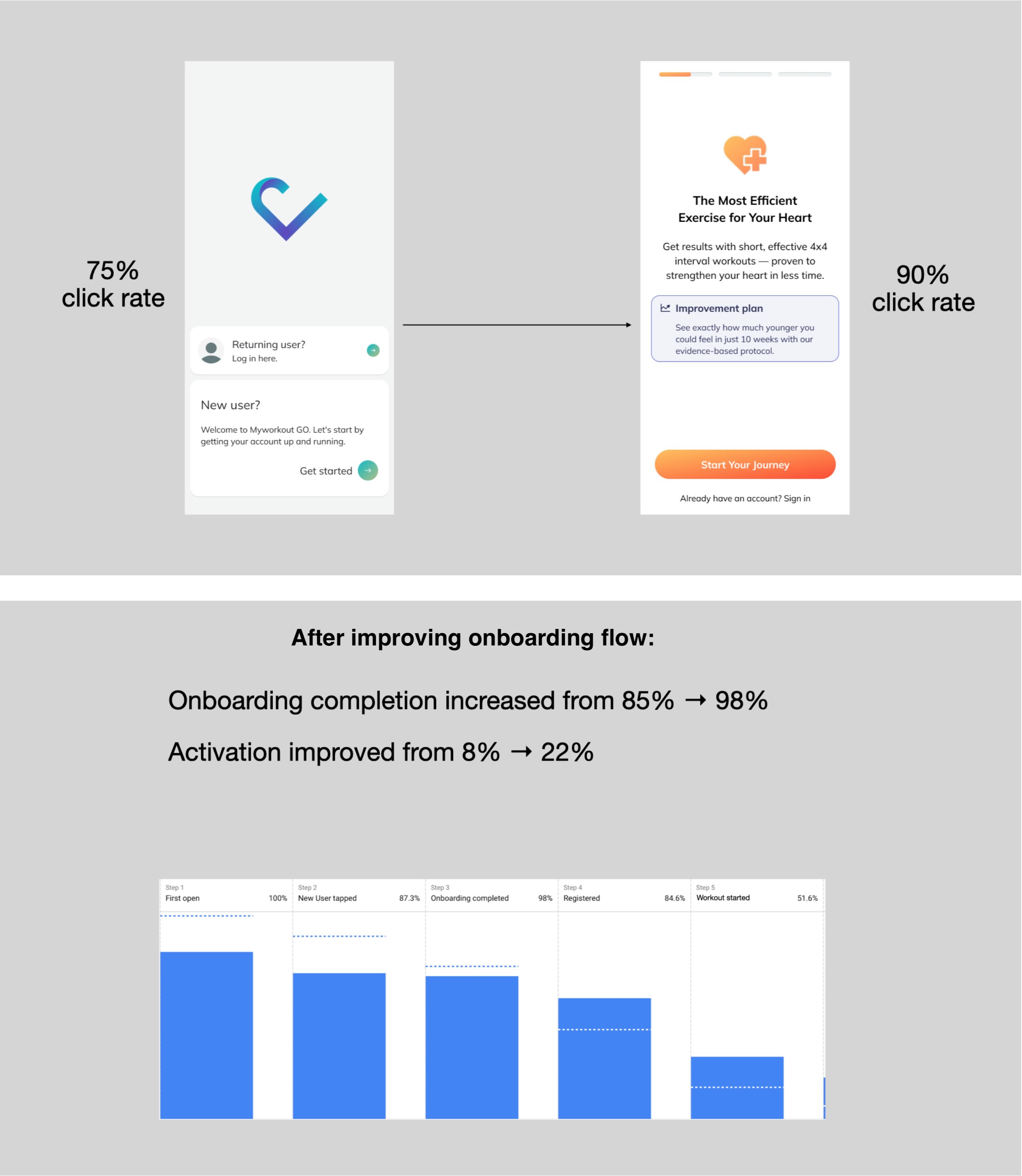
Most teams don't need more ideas, they need a way to choose. Prioritization turns a backlog into a portfolio of bets aimed at today's business goal, so effort turns into results.
Why Prioritization Is So Hard (and So Crucial)
In theory, it sounds simple: pick what's most important. In practice, it's a war of opinions, marketing wants acquisition, design wants redesign, engineering wants cleanup, leadership wants everything by yesterday.The result?
You end up with an overloaded roadmap and a tired team wondering why "nothing moves the numbers."
Bad prioritization wastes not just time but belief. When teams repeatedly ship work that doesn't create visible impact, morale and trust in the process collapse.
That's why true prioritization isn't a planning exercise, it's a growth discipline.
How to Connect Work to Outcomes
To build a roadmap that works, start with one question:What outcome are we trying to change right now?
Everything flows from that.
If you can't link a feature, campaign, or refactor to a measurable metric, it's not a priority, it's a distraction.
Start here:
- Choose a single focus metric per cycle.
For example: Trial → Paid conversion, D7 retention, WAU, or ARPU. One metric forces clarity and accountability. - List all potential initiatives.
Gather input from the team, features, experiments, technical improvements, anything that could affect the target metric. - Write the expected impact for each.
One sentence: "We believe doing X will increase [metric] by Y% because Z."
If you can't complete that sentence, you don't yet understand the problem. - Score and prioritize.
Use RICE, ICE, or a simple Impact/Effort matrix to make decisions visible and fair.
The Psychology Behind a Good Roadmap
Prioritization isn't just math, it's about managing human attention. A good roadmap focuses your team's limited cognitive and emotional energy on a few things that matter.If everything is "priority," nothing is.
If every week's goal changes, no one believes the goalpost is real.
So instead of pretending to "balance everything," build rhythm around trade-offs:
- We'll focus on activation, not acquisition, this quarter.
- We'll improve conversion, not retention, this sprint.
- We'll fix tech debt only if it directly blocks speed or reliability.
A roadmap that says "no" more often than "yes" is a healthy one.
Common Anti-Patterns (and How to Avoid Them)
- Stakeholder priority without a metric.
"CEO wants it" isn't a valid score. Always ask: what's the measurable goal? - Vanity projects.
Shiny redesigns or feature rebuilds that don't change user behavior. - Big rock blindness.
Teams invest months into massive "epics" that deliver no incremental learning along the way. - Shipping without measuring.
If a release doesn't include how you'll measure success, it's just activity, not growth.
The Art of Saying "Not Now"
One of the hardest parts of prioritization is letting go of good ideas.Great teams don't do everything at once, they sequence.
They trust that saying "later" is how they create space for what matters now.
A "no" today isn't rejection, it's focus.
Final Thoughts
A roadmap is not a forecast. It's a living hypothesis about what will move your business forward.Treat every initiative as a bet, not a commitment. Bet small, measure honestly, and double down on what works.
When your roadmap connects effort to impact, your team stops arguing about what to build, and starts learning what actually grows.
Written by X91 Tech, Growth Studio for Digital Products.